Macon structures feature distinct architectural vulnerabilities that rodents exploit continuously during seasonal temperature transitions. Properties across the Vineville Historic District and Ingleside frequently…
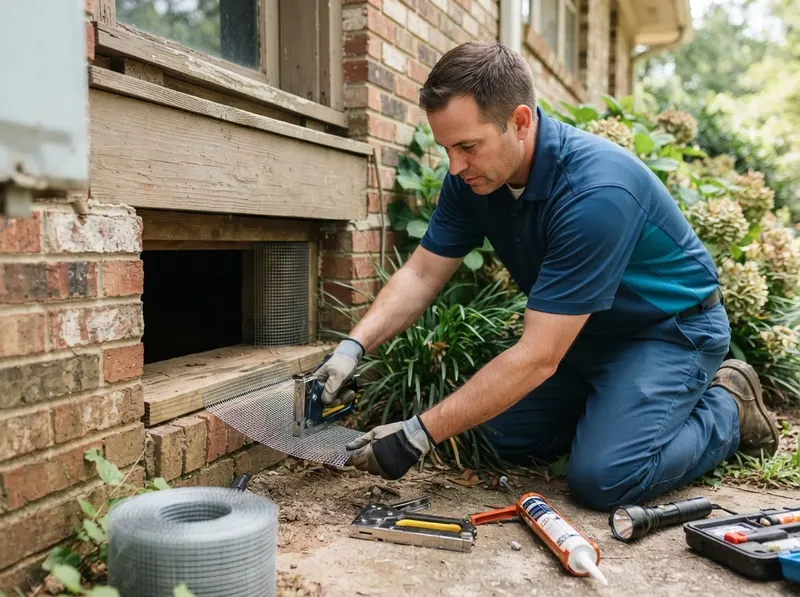
Macon structures feature distinct architectural vulnerabilities that rodents exploit continuously during seasonal temperature transitions. Properties across the Vineville Historic District and Ingleside frequently utilize raised brick-and-pier foundations where red clay crawlspace soil retains humidity, causing subfloor timbers to soften. A mature roof rat requires an entry diameter of only 0.75 inches, roughly the size of a standard quarter, to breach a foundation perimeter. Consumer snap traps and surface poisons fail to solve structural infestations because chemical baits leave carcasses inside exterior wall cavities, resulting in severe indoor odor, secondary dermestid beetle blooms, and zero physical defense against incoming outdoor colonies. Structural fortification replaces broadcast chemical reliance with 0.25-inch galvanized hardware cloth, copper mesh, and elastomeric sealants applied over weeping brick vents, soffit returns, and plumbing subfloor penetrations.
In heavily wooded residential pockets such as Shirley Hills and Northwoods, mature oak canopies hang directly over asphalt-shingle rooflines, granting roof rats immediate access to attic fascia transitions and gable vents. ShieldPoint Pest Control executes deliberate, targeted mechanical trapping arrays along established sebum-stained runways within the insulation plane while securing every vertical gap above 8 feet. For mid-century slab properties in East Macon, Cherokee Heights, Bellevue, and Suburban Woods, rodent pressure concentrates at low elevations: garage door weather-stripping sweeps, air conditioner line-set entries, and crawlspace access hatch frames. Fortification work in these zones seals perimeter sill-plate gaps to physically deny entry without discharging volatile chemical compounds into conditioned living spaces or threatening domestic pets.
The mechanical workflow operates systematically through non-chemical containment and physical barrier installation. First, an interior trapping network isolates and captures active specimens without secondary poison risks. Second, technicians clean localized biological runway markings using enzymatic compounds that dissolve rodent pheromone trails. Third, structural technicians reinforce exterior penetrations using 19-gauge zinc-coated steel hardware cloth and exterior-grade masonry anchors across foundation vent screens. Fourth, a check-back protocol at 5- to 7-day intervals documents trap capture counts, clears hardware, and verifies that the structural envelope shows zero secondary gnaw marks before concluding the project.
Every job gets a firm, written price after a free on-site visit.
Tell us about your rodent trapping and structural fortification job in Macon and we'll send a clear, written quote, usually the same day.
 ShieldPoint Pest Control